
Moving Beyond Joint Pain: Comprehensive Osteoarthritis Management in Thousand Oaks, CA
If you are experiencing chronic joint stiffness, grinding sensations, and persistent aches that worsen with activity, you are likely among the millions dealing with the daily challenges of osteoarthritis. Often called “wear-and-tear” arthritis, this condition is the most common form of arthritis and a leading cause of disability worldwide. While it might feel like a natural part of aging, the debilitating osteoarthritis pain it causes is manageable and treatable.
At PMIR Medical Center in Thousand Oaks, California, we specialize in providing cutting-edge, personalized care focused on alleviating your osteoarthritis symptoms, restoring mobility, and significantly improving your quality of life. We believe that a diagnosis of osteoarthritis does not mean sacrificing your favorite activities or enduring chronic discomfort.
Understanding Osteoarthritis (OA)
Osteoarthritis is a chronic joint disease characterized by the breakdown of cartilage—the firm, rubbery tissue that cushions the ends of bones where they meet to form a joint. Cartilage allows bones to glide smoothly over one another. When the cartilage wears down, bones rub against each other, leading to pain, stiffness, and loss of movement.
OA primarily affects weight-bearing joints, such as the knee osteoarthritis and hip osteoarthritis, but it can also affect the hands, spine, and feet. Unlike rheumatoid arthritis, OA is not a systemic autoimmune disease but rather a mechanical one. However, the chronic inflammation and joint changes that result from the mechanical damage still require expert medical management.
Recognizing the Symptoms: A Closer Look at Osteoarthritis Symptoms
Early diagnosis and intervention are key to slowing the progression of the disease and maximizing your comfort. It is important to recognize the osteoarthritis symptoms that indicate a problem:
-
Pain: The most prominent symptom is osteoarthritis pain in the joint, which typically worsens with activity and gets better with rest. As the condition progresses, pain can become chronic and may even be present during rest or at night.
-
Stiffness: Joints often feel stiff, especially first thing in the morning or after a period of rest. This stiffness is usually short-lived, typically lasting less than 30 minutes, distinguishing it from the stiffness associated with inflammatory arthritis.
-
Tenderness: The joint may feel tender or sore when you apply light pressure to it.
-
Loss of Flexibility: An inability to move the joint through its full range of motion.
-
Grating Sensation: You may feel or hear a clicking, popping, or grating sound (crepitus) when the joint is moved, caused by the rough surfaces of bone rubbing together.
-
Swelling: Soft tissue swelling around the joint, which may be caused by inflammation or the formation of bone spurs (osteophytes).
-
Bone Spurs (Osteophytes): Hard lumps may form around the joint, particularly in the finger joints.
If you are experiencing these osteoarthritis symptoms, seeking professional medical guidance is essential to receive a confirmed diagnosis and begin an effective osteoarthritis treatment plan.
Osteoarthritis vs Rheumatoid Arthritis: Knowing the Difference
Many people confuse osteoarthritis vs rheumatoid arthritis (RA), but they are fundamentally different diseases that require different long-term management strategies. Understanding the distinction is vital for accurate treatment.
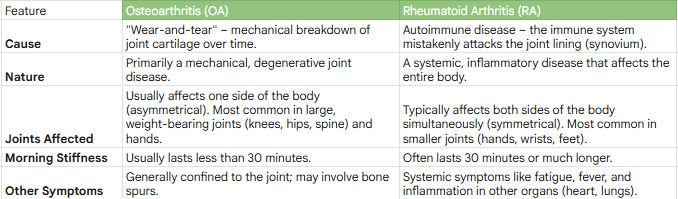
While they are different, both conditions lead to chronic joint pain and reduced quality of life, which is why specialized osteoarthritis pain management is so important.
Targeting Pain Where It Starts: Knee Osteoarthritis and Hip Osteoarthritis
While OA can affect any joint, knee osteoarthritis and hip osteoarthritis are the most common and often the most debilitating due to their critical role in mobility and weight bearing.
Knee Osteoarthritis
This condition causes pain and stiffness that makes walking, climbing stairs, and standing difficult. As the cartilage wears down, the knee joint space narrows, and alignment can shift (leading to bowlegs or knock-knees). Effective osteoarthritis treatments for the knee, offered at our Thousand Oaks, CA center, include targeted injections, therapeutic exercises, and bracing.
Hip Osteoarthritis
Hip osteoarthritis typically presents as groin pain, sometimes radiating down the thigh or to the buttocks. It can severely limit movement needed for simple tasks like tying shoes or getting into a car. Pain management often focuses on minimizing inflammation deep within the joint capsule through precise image-guided injections and advanced non-surgical techniques.
The Integrated Approach: Osteoarthritis Treatment and Pain Relief
The most effective osteoarthritis treatment is not a single drug or procedure but a comprehensive, integrated plan designed to reduce pain, improve function, and slow disease progression. At PMIR Medical Center, our approach to osteoarthritis treatments emphasizes conservative care first, progressing to advanced interventional options for sustained osteoarthritis pain relief.
Conservative Management & Lifestyle Adjustments
The first line of treatment for osteoarthritis involves non-drug and non-surgical approaches:
-
Weight Management: Reducing body weight significantly lowers the stress placed on weight-bearing joints, especially the knees and hips, providing substantial osteoarthritis pain relief.
-
Physical Therapy: Specialized exercises strengthen the muscles surrounding the joint (e.g., quadriceps for knee OA, glutes for hip OA), which stabilizes the joint and acts as a shock absorber. This is a critical component of osteoarthritis pain treatments.
-
Assistive Devices: Using canes, walkers, or custom shoe inserts can help redistribute pressure and support painful joints.
-
Heat and Cold Therapy: Applying heat or cold can temporarily reduce pain and stiffness.
Pharmacological Osteoarthritis Pain Reliever Options
For managing daily pain, several types of medication can be used as an osteoarthritis pain reliever:
-
Topical Agents: Creams or gels containing NSAIDs or capsaicin can be applied directly to the painful joint, offering localized pain relief with fewer systemic side effects.
-
Oral NSAIDs: Non-steroidal anti-inflammatory drugs (like ibuprofen or naproxen) reduce both pain and inflammation. However, long-term use requires careful monitoring due to potential side effects.
-
Acetaminophen: Often recommended for mild-to-moderate pain, it is a simple analgesic but lacks anti-inflammatory properties.
-
Duloxetine: An antidepressant that has also been approved to help manage chronic musculoskeletal pain, including that caused by OA.
Advanced Interventional Osteoarthritis Pain Treatments
When conservative methods and oral medications fail to provide adequate relief, targeted interventional procedures offer potent and often long-lasting osteoarthritis pain relief. These are the core of our osteoarthritis and pain management specialization in Thousand Oaks, California:
-
Corticosteroid Injections: A powerful anti-inflammatory medication is injected directly into the joint space. Guided by X-ray (fluoroscopy) or ultrasound, these injections quickly reduce inflammation and provide significant, though temporary, pain relief.
-
Viscosupplementation (Hyaluronic Acid Injections): Often used for knee osteoarthritis, this involves injecting a gel-like substance that mimics the natural fluid (synovial fluid) in the joint. It lubricates the joint and acts as a shock absorber, reducing friction and pain.
-
Nerve Blocks and Ablation: For chronic, unrelenting osteoarthritis pain, specialized procedures like Genicular Nerve Blocks (for the knee) or nerve root blocks (for the spine) can identify and then utilize Radiofrequency Ablation (RFA) to stop the nerves that transmit pain signals from the joint to the brain. This can provide months of effective pain relief, giving patients a crucial window to engage in physical therapy and strengthen the joint.
-
Platelet-Rich Plasma (PRP) Therapy: A form of regenerative medicine where a concentration of the patient’s own platelets is injected into the joint. Platelets release growth factors that may help reduce inflammation and promote healing, offering a promising new avenue for treatment for osteoarthritis.
By combining these advanced osteoarthritis pain treatments with conservative care, PMIR Medical Center in Thousand Oaks, CA is dedicated to providing comprehensive and lasting osteoarthritis and pain management that significantly improves your daily function and overall quality of life. Don’t let chronic joint pain limit your potential.
Common Questions About Osteoarthritis
Here are 5 questions people frequently ask when looking for information on osteoarthritis:
What is the best osteoarthritis pain reliever for daily use?
For mild to moderate pain, an oral pain reliever like acetaminophen or topical NSAIDs are often recommended first. For more severe pain or inflammation, prescription oral NSAIDs or specialized interventional osteoarthritis pain treatments (like joint injections) often provide superior, targeted relief.
Can I reverse the damage caused by osteoarthritis?
Unfortunately, the cartilage damage in osteoarthritis cannot be reversed once it is lost. However, modern osteoarthritis treatments and lifestyle changes (like weight loss and targeted exercise) can effectively manage osteoarthritis symptoms, halt the progression of further damage, and dramatically improve function and reduce osteoarthritis pain.
Should I rest a joint with osteoarthritis, or keep moving it?
While rest is helpful during an acute flare-up of osteoarthritis pain, avoiding movement altogether is detrimental. Consistent, gentle movement through specific physical therapy exercises is essential to maintain flexibility, strengthen surrounding muscles, and improve joint health. Osteoarthritis treatment plans strongly emphasize controlled activity.
Are injections a permanent treatment for osteoarthritis?
No single injection provides permanent relief. Corticosteroid injections and viscosupplementation are typically used as osteoarthritis pain treatments to provide temporary but significant relief, lasting anywhere from a few weeks to several months. They are part of a larger, ongoing osteoarthritis and pain management strategy.
Does weather affect osteoarthritis pain?
Many people with osteoarthritis report increased osteoarthritis pain before or during changes in weather, particularly when the barometric pressure drops. While the exact reason is debated, some theories suggest that low pressure allows tissues around the joint to swell, placing greater pressure on the nerves.
Take the Next Step Toward Osteoarthritis Pain Relief
If osteoarthritis symptoms—whether from knee osteoarthritis or hip osteoarthritis—are dictating how you live your life, it is time to seek expert help. Our pain management specialists are ready to design a customized osteoarthritis treatment plan that integrates the most effective conservative and interventional osteoarthritis treatments available today.
Contact PMIR Medical Center in Thousand Oaks, CA, to begin your journey toward freedom from chronic joint discomfort and achieve the lasting osteoarthritis pain relief you deserve.